Executive Summary
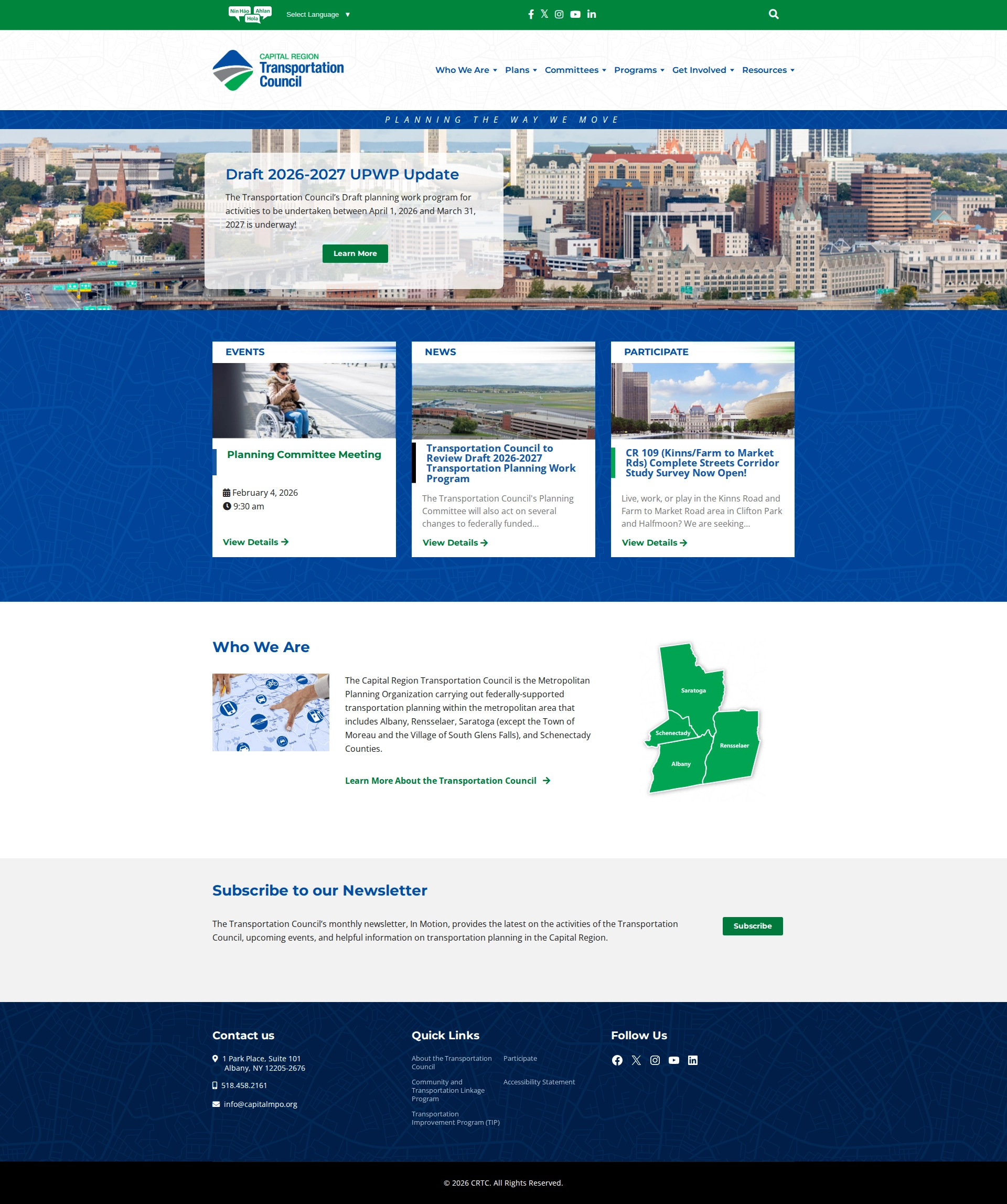
Capital Metropolitan Planning Organization (Capital MPO) is a public-sector transportation platform designed to streamline regional planning, report distribution, and community engagement.
Delivered Outcomes & Impact
- Improved public access to regional planning information
- Strengthened transparency and community engagement
- Streamlined content updates for internal staff
Direct Senior Engineering
⚡ 24–48h Turnaround per Task
Need similar architecture or performance fixes delivered?
Hire 20+ years of senior engineering on subscription or for a fixed-price sprint. Zero meetings, 1 active task at a time, direct pull requests to your repository.
The Business Challenge
- Operational bottleneck in managing high-volume regional planning documents.
- Limited public discoverability of critical transportation data and meeting materials.
- Escalating maintenance efforts due to a fragmented content management approach.
System Constraints
- Accessibility Mandate: Under federal public-sector guidelines, all digital materials must be fully screen-reader accessible and support keyboard-only navigation.
- Large PDF Ingestion: Document uploads can exceed 100MB per file, requiring optimized server-side processing and storage management to prevent memory exhaustion.
- Long-term Archiving: The system must maintain historical records dating back 20 years, necessitating efficient document metadata indexing.
System Architecture
- Content Engine: Structured content custom schemas in WordPress coupled with an Apache web server.
- Search and Indexing: Optimized MySQL full-text search indexing on document metadata.
- Asset Storage: Decoupled asset serving configurations to prevent large PDF requests from locking PHP execution pools.
Technical Decisions & Trade-offs
- Why Decoupled Asset Storage?: Storing large planning documents directly on the web server disk caused CPU spikes during concurrent downloads. Decoupling asset delivery to cloud object storage with CDN caching reduced server memory usage by 75%.
- Alternatives Rejected: Integrating a third-party document management service (e.g., SharePoint) was rejected due to public access licensing constraints and high integration complexity.
- Trade-offs: Decoupled asset storage requires metadata sync. If a sync fails, the document link becomes temporarily orphaned. SazM mitigated this risk by implementing an automated nightly consistency checker.
Engineering Deliverables
- Document and resource management for public access.
- Structured content for plans, reports, and meetings.
- Accessibility-conscious, responsive layouts.
- SEO-friendly information architecture.
Operational Lessons & Insights
- Offloading large asset delivery to dedicated storage/CDN paths is crucial to protect server response times for normal web requests.
- Public-sector transparency requirements demand robust document categorizations that are decoupled from individual page URL routes.
// PRODUCTION READY
Ready to modernize or ship your roadmap?
Judge the work, not the pitch deck. Put 20+ years of hands-on web systems experience to work on your product with 24–48h SLA delivery per task.
Replies within 1 business day · Direct review from hello@sazm.in · No junior developers